
Suppose your leadership meeting ends with every priority apparently on track. Later that afternoon, you learn that an important deadline is in doubt. The leader responsible already knew there was a problem but wanted to work out a solution before raising it.
If that sounds familiar, look at how you respond to an uncomfortable update. Give the leader room to explain what is happening before you ask why they let it happen.
A shared plan depends on honest updates. Your leaders need to be able to report a concern while there is still time to respond, even when they cannot yet explain the cause. Make that expectation explicit, then organise the meeting so people can follow it.
Let people raise a concern without a finished solution
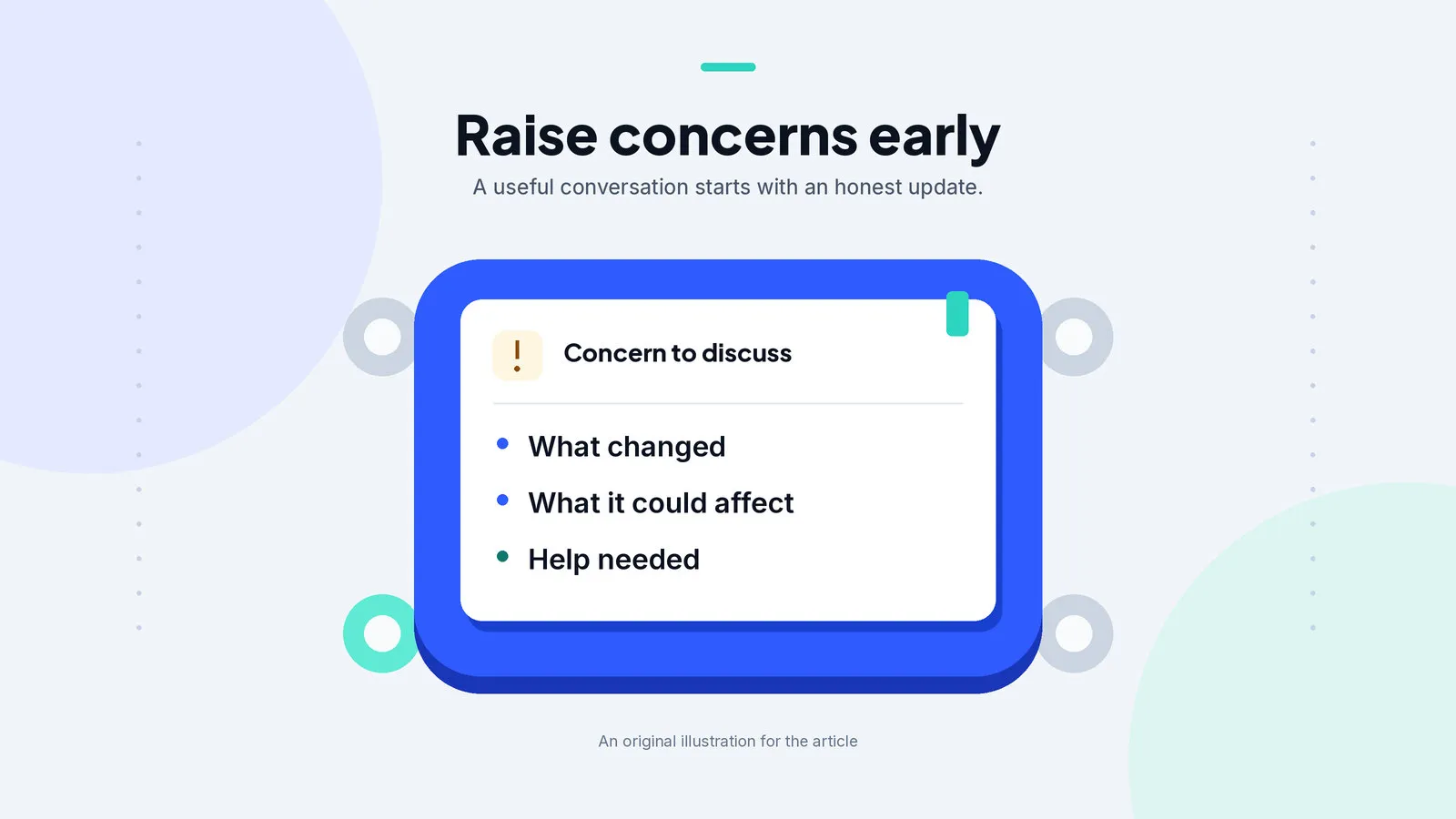
Before your next Weekly Leadership Meeting, ask each leader to add any concern that could affect an agreed goal to the Issues List. They should describe what they have noticed and where they need the team’s help.
Don’t require a complete recommendation before an issue earns a place. That can leave the team waiting while one person investigates something that needs several departments’ input.
Imagine a Canadian service company with a Quarterly Priority to shorten the wait for new customers. This is a hypothetical example. Its operations leader notices that work is arriving faster than the team can schedule it. They don’t yet know whether the cause is staffing, missing information or the way appointments are assigned.
That uncertainty belongs in the discussion. Ask the leader to bring the scheduling records they have and identify what remains unknown. The team can decide what to check without pretending it already knows the answer.
Respond to the update before judging the explanation
When a leader flags a problem, let them finish. Ask what changed and which commitment could be affected. Save explanations about what should have happened until you understand the current situation.
As founder or CEO, watch your own response especially closely. If you interrupt to defend the plan you approved, you are making it harder to examine whether the plan still works.
You can take an issue seriously without deciding immediately who is at fault. In the scheduling example, first establish whether promised appointments are at risk and whether anyone needs an update today. Then examine how the team got here.
Keep the same standard for everyone, including yourself. Bring forward a commitment you are worried about rather than reserving this exercise for other leaders. Be clear about the help you need and accept the same follow-up you ask of the team.
Separate observations from assumptions
Use the issue note to distinguish what the team knows from what it suspects. A change in the appointment backlog is an observation you can check. A claim that another department does not care about delivery is an interpretation of people’s motives.
Return the discussion to the work. Ask which information was missing, where a handoff stalled or which expectation was unclear. Let the affected leader add context before the team chooses an explanation.
For the hypothetical service company, the useful question is whether sales and operations are using the same information about available appointments. That gives both leaders something concrete to examine.
Don’t demand perfect evidence before hearing a concern. Record an uncertainty as an uncertainty and give someone a specific question to answer. Avoid turning a guess into a fact simply because it appears in the meeting notes.
Give quieter leaders a way into the discussion
Before discussing a difficult issue, allow a minute for everyone to write down the risk they see or the information they think is missing. Then invite each leader to contribute before the most senior person offers a solution.
Use this for the issues that need it, rather than making every update a formal exercise. The aim is to hear relevant information before the conversation settles around one explanation.
If your team works across Canadian time zones, collect concerns in the shared agenda before the call. A leader joining early in Vancouver should have the same chance to prepare as a colleague in Toronto. Keep the questions visible and allow written additions after the meeting when someone needs to check a detail.
Don’t put an individual on the spot to prove that everyone feels comfortable speaking. Offer the opening, give them time and pay attention to how the team responds when they use it.
Finish with help that someone owns
An honest update needs a useful response. Decide whether the team needs to investigate, change the plan or act immediately to protect a commitment.
In the scheduling example, you might assign an Action Item to compare promised dates with available appointments before the end of the week. Name one owner, agree who will help and specify when the findings will come back. If customers need an update sooner, assign that communication separately.
Keep responsibility for resolving the problem clear. Raising an issue does not automatically transfer all the work to the CEO. Equally, the person who reports it should not inherit every task needed to fix a problem across departments.
Record the agreed next step beside the issue. At the following meeting, check what the owner learned and whether the risk has changed. If the work stalled, discuss the obstacle rather than treating the original warning as the failure.
Try it at this week’s meeting
Ask each leader to bring one concern that could affect the team’s agreed goals. You don’t need to force an issue from someone who has nothing to flag. Start with a real concern and give it enough attention to agree on a next step.
Afterwards, review your own response. Did you let the person explain? Did the team leave with a clearer understanding and an owner for the follow-up? Use those questions to improve the next discussion.
Your current agenda and notes are enough to start. If maintaining the wider meeting routine is becoming difficult, see how LeaderSync works. For this week, make room for an update that is still uncertain, and help the team decide what to do about it.